

Trump's Draft Order to Control Voting: What Every American Needs to Know
A bombshell draft executive order is circulating in Washington — and if signed, experts say it could fundamentally reshape how Americans vote. President Trump is reportedly considering an executive order that would give the federal government unprecedented control over U.S. elections, a move that top Democrats and voting rights organizations are calling unconstitutional, dangerous, and a direct assault on American democracy.
Here's everything you need to know about what's in this draft order, why it's alarming legal experts across the political spectrum, and what your rights look like if it ever takes effect.

Photo by David Dibert on Pexels | Source
What Is Trump's Draft Voting Order?
According to reporting from Democracy Docket and other outlets, the draft executive order would attempt to grant the federal executive branch — meaning the president and his appointees — significantly more influence over the administration of U.S. elections. This is a dramatic departure from how American elections have historically operated.
Under the U.S. Constitution, elections are primarily managed at the state and local level. The Help America Vote Act (HAVA), the National Voter Registration Act (NVRA), and the Voting Rights Act all establish guardrails around how federal power can and cannot interact with elections. Critics say Trump's draft order would blow past many of those guardrails.
Key elements reportedly in the draft include:
- Federal oversight of voter registration databases, potentially allowing executive branch officials to purge voter rolls based on federal criteria
- Expanding the role of the Department of Homeland Security in election security in ways that were never previously authorized by Congress
- Mandating specific documentary proof of citizenship requirements at the federal level, despite courts repeatedly striking down such measures
- Directing federal agencies to withhold funding from states that don't comply with the new federal election standards
Why Voting Rights Experts Are Alarmed
Voting rights lawyers and constitutional scholars were quick to respond — and their reaction was nearly unanimous: this order, if signed, would face immediate and likely successful legal challenges.
Marc Elias, one of the nation's top election lawyers and founder of Democracy Docket, called the draft order "the most aggressive attempt by any president to seize control of how Americans vote." His organization, which has litigated hundreds of voting rights cases, says the order violates the Elections Clause of the Constitution, which explicitly grants Congress — not the president — authority to regulate federal elections.
Here's why legal experts see this as deeply problematic:
- Separation of powers: The Constitution gives states and Congress authority over elections. An executive order cannot override that.
- Anti-commandeering doctrine: Federal courts have long held that the federal government cannot force state officials to administer federal programs.
- Due process concerns: Mass voter roll purges based on federal criteria could strip eligible voters of their rights without proper notice or recourse.
- Voting Rights Act conflicts: Many provisions in the draft could disproportionately impact minority voters, raising serious VRA concerns.
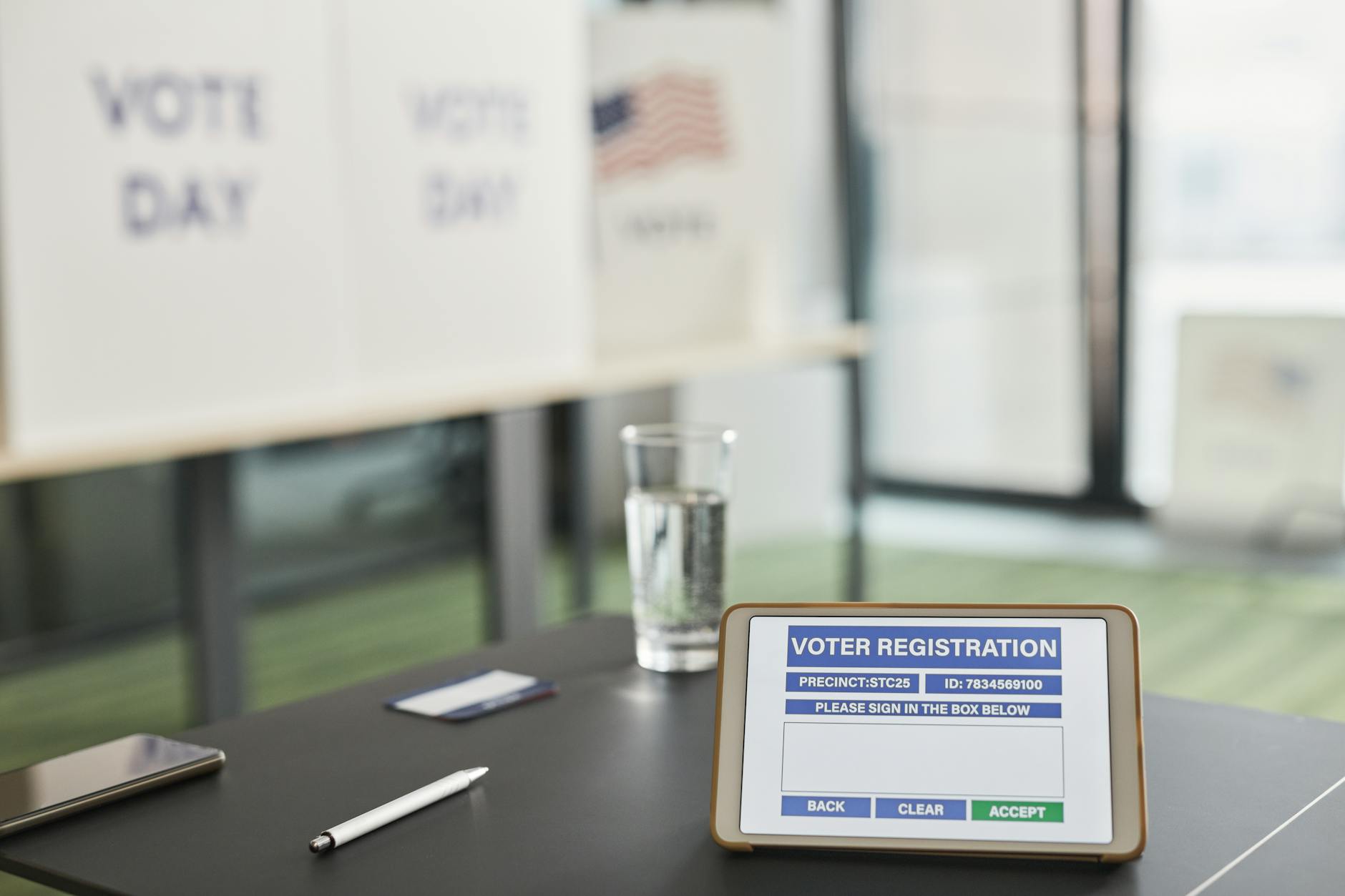
Photo by Edmond Dantès on Pexels | Source
Democrats and Civil Rights Groups Sound the Alarm
Top Democratic leaders were equally vocal in their opposition. House Minority Leader Hakeem Jeffries called the draft order "a clear and present danger to American democracy," while Senate Democrats warned of immediate legislative and legal responses if the order is signed.
Civil rights organizations including the NAACP Legal Defense Fund, the Brennan Center for Justice, and the ACLU have all signaled they are prepared to file lawsuits the moment any such order is signed. Given their track record of successfully challenging voting restrictions in federal court over the past several years, legal analysts give them a strong chance of obtaining emergency injunctions.
Kamala Harris, who recently endorsed Jasmine Crockett in the Texas Senate race, also weighed in, saying that protecting the right to vote is "the defining civil rights issue of our generation."
It's worth noting that several Republican election officials have also raised quiet concerns. Secretaries of State in states like Georgia and Arizona — who are Republicans — have previously pushed back on federal overreach into elections, recognizing that election administration is fundamentally a state function.
What Happens If the Order Is Signed?
If Trump signs the order, here's the likely sequence of events:
- Within hours: Multiple voting rights organizations file emergency injunctions in federal court
- Within days: Federal judges — including those appointed by both parties — would likely pause implementation pending review
- Within weeks: The case heads to appellate courts and almost certainly to the Supreme Court
- Long-term: Even a conservative-majority Supreme Court has shown reluctance to dramatically expand executive power over elections without clear congressional authorization
The legal doctrine of "major questions" — which the Supreme Court has applied in recent years — holds that executive agencies need clear congressional authorization before taking actions of enormous political and economic significance. Seizing control of U.S. elections would almost certainly qualify.
What Can You Do Right Now?
Regardless of your political views, protecting your voting rights is something every American should take seriously. Here are concrete steps you can take:
- Check your voter registration status at vote.gov to make sure you're still registered
- Sign up for Democracy Docket's alerts to stay informed about legal challenges
- Contact your state's Secretary of State to understand your state's voting laws and how your data is being protected
- Know your rights: If you're ever told you've been removed from voter rolls, you typically have the right to cast a provisional ballot
- Support voting rights organizations that are actively litigating these issues in court

Photo by Edmond Dantès on Pexels | Source
The Bigger Picture: A Pattern of Executive Overreach?
This draft voting order doesn't exist in a vacuum. It's part of a broader pattern in the early months of the Trump administration where executive orders have pushed into legal territory that courts have historically reserved for Congress or the states.
From immigration enforcement to education funding conditions to now elections, the administration has repeatedly tested the boundaries of executive power — and courts have repeatedly pushed back. The question isn't whether this order would be challenged; it's how quickly and how decisively courts would act.
What makes the voting order uniquely alarming to legal scholars is that elections are the mechanism through which all other power is checked. An executive branch that controls elections is, in theory, an executive branch that can entrench itself indefinitely. That's not a hypothetical raised only by partisans — it's a concern expressed by constitutional scholars across the ideological spectrum.
The Bottom Line
Trump's draft order to seize control of U.S. voting is not yet law — and it may never be, given the enormous legal obstacles it would face. But the fact that it exists, that it's being seriously considered, and that it would represent a fundamental departure from 230 years of American election administration makes it one of the most consequential political stories of 2026.
Stay informed, stay registered, and stay engaged. In a democracy, your vote is the most powerful tool you have — and right now, there are people fighting in court to make sure you keep it.
FAQ
What does Trump's draft executive order on voting actually do? The draft order reportedly seeks to give the federal executive branch — specifically the president and his appointees — greater control over voter registration databases, election administration, and voter eligibility requirements. Critics say this directly conflicts with the Constitution's Elections Clause.
Is Trump's voting executive order constitutional? Most constitutional scholars and voting rights lawyers say it is not. The Constitution gives Congress and state governments primary authority over elections, and courts have consistently limited executive overreach in this area. Multiple legal challenges would be filed immediately if it's signed.
What are voting rights organizations doing about the draft order? Organizations like Democracy Docket, the ACLU, the Brennan Center for Justice, and the NAACP Legal Defense Fund have all signaled they are prepared to file emergency lawsuits if the order is signed, seeking to block its implementation while courts review its constitutionality.
How do I check if my voter registration is still valid? You can check your voter registration status at vote.gov, which links to your state's official voter registration portal. It's a good idea to verify your registration periodically, especially during periods of political uncertainty around election law.
Has any president tried to control elections through executive order before? No president has attempted to use executive authority to take over the administration of U.S. elections to this degree. While presidents have issued executive orders related to election security and accessibility, directly controlling voter rolls or withholding funding from non-compliant states would be historically unprecedented.
Frequently Asked Questions
What does Trump's draft executive order on voting actually do?
The draft order reportedly seeks to give the federal executive branch greater control over voter registration databases, election administration, and voter eligibility requirements. Critics say this directly conflicts with the Constitution's Elections Clause, which reserves election authority for Congress and the states.
Is Trump's voting executive order constitutional?
Most constitutional scholars and voting rights lawyers say it is not. The Constitution gives Congress and state governments primary authority over elections, and courts have consistently limited executive overreach in this area.
What are voting rights organizations doing about the draft order?
Organizations like Democracy Docket, the ACLU, the Brennan Center for Justice, and the NAACP Legal Defense Fund have all signaled they are prepared to file emergency lawsuits if the order is signed. They would seek to block its implementation while courts review its constitutionality.
How do I check if my voter registration is still valid?
You can check your voter registration status at vote.gov, which links to your state's official voter registration portal. It's a good idea to verify your registration periodically, especially during periods of political uncertainty around election law.
Has any president tried to control elections through executive order before?
No president has attempted to use executive authority to take over election administration to this degree. While presidents have issued orders related to election security, directly controlling voter rolls or withholding funding from non-compliant states would be historically unprecedented.


