
Oil Prices Smash $100 as Iran War Sends Shockwaves Through Global Markets
For the first time in four years, crude oil prices have broken above the psychologically critical $100-per-barrel threshold, according to BBC reporting published this week. The catalyst is the ongoing and rapidly escalating conflict involving Iran, which has disrupted energy supply chains across the Persian Gulf region and sent shockwaves rippling from Wall Street to Seoul. As of the morning of March 9, 2026, Dow futures had tumbled more than 1,000 points, with U.S. oil prices approaching $120 per barrel in premarket trading, according to live updates from CNBC.
The speed and severity of the oil spike has caught many analysts off guard. What began as a regional military conflict has rapidly morphed into what The Wall Street Journal described as "the long-feared Persian Gulf oil squeeze" — a scenario that energy security experts have warned about for years but few expected to materialize quite so dramatically or so quickly.

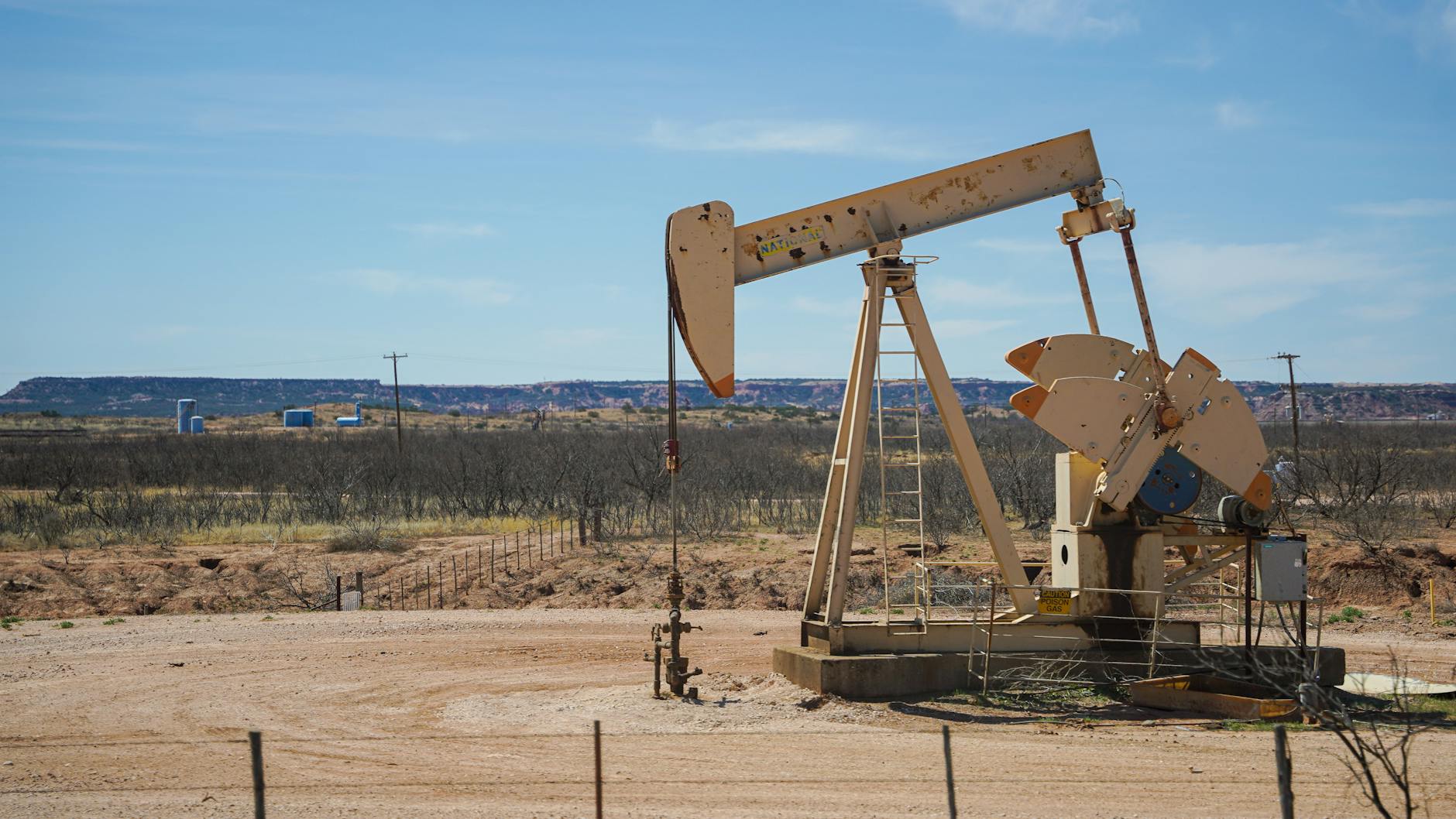
Photo by Jeffry Surianto on Pexels | Source
How the Persian Gulf Crisis Triggered the Price Explosion
The Persian Gulf is home to some of the world's most strategically vital oil shipping lanes, and any sustained disruption to those routes immediately translates into supply anxieties on global commodity markets. According to reporting from The Wall Street Journal, the pressure on Gulf shipping and output has been building since the conflict began, with the latest escalation pushing markets over the edge.
Adding to the geopolitical tension, reports from Axios this week revealed that the United States has expressed significant dismay over Israel's decision to strike Iranian fuel infrastructure — a move that, according to sources cited by Axios, was not coordinated with Washington and has complicated U.S. diplomatic and military strategy in the region. These strikes on Iranian fuel facilities have further tightened already strained global supply expectations, giving commodity traders additional justification for aggressive upward price bets.
Meanwhile, the U.S. military carried out another boat strike in the region, killing six individuals, according to a report from The New York Times published this week. The military engagement underscores how kinetic the conflict has become, with direct implications for the safety of maritime shipping through one of the world's most oil-critical waterways. Separately, CNN reported the death of a seventh U.S. service member, who was killed after being wounded in an attack in Saudi Arabia — a sobering reminder of the human cost alongside the economic fallout.

Photo by Leeloo The First on Pexels | Source
What $100+ Oil Means for the Global Economy
The economic implications of sustained triple-digit oil prices are profound and wide-ranging. MarketWatch reported this week that the spike in oil prices has triggered talk of what analysts are calling an "economic doomsday scenario" — a confluence of energy-driven inflation, slowing consumer spending, and potential stagflation that central banks would struggle to combat with conventional monetary tools.
The impact is already being felt in Asia. Bloomberg reported that South Korean stocks plunged this week as the oil spike weighed heavily on the outlook for an energy-import-dependent economy. South Korea, which relies almost entirely on imported oil for its energy needs, faces immediate pressure on trade balances, manufacturing costs, and consumer prices.
For U.S. markets, the timing is particularly painful. AP News reported this week that Trump's so-called "roaring" economy is already meeting a rough start to 2026, with the latest economic data showing cracks before the full force of the oil shock was felt. Now, with Dow futures plummeting more than 1,000 points in a single morning, according to CNBC's live tracking, the combination of a slowing economy and an energy price shock raises serious questions about the resilience of U.S. growth in the months ahead.
Key economic pressure points identified in recent reporting include:
- Inflation re-acceleration: Energy costs feed directly into consumer prices across transportation, food production, and manufacturing.
- Corporate margin compression: Airlines, logistics companies, and manufacturers face immediate cost increases with limited ability to hedge at current price levels.
- Consumer spending pullback: Higher gas prices historically reduce discretionary spending, which accounts for a significant portion of U.S. GDP.
- Bond market volatility: Bloomberg reported that both stock and bond traders are bracing for another highly volatile open, suggesting the financial stress is not confined to equities alone.

Photo by Erik Mclean on Unsplash | Source
The Geopolitical Layers Making This Crisis Harder to Resolve
Unlike previous oil price spikes driven primarily by supply or demand imbalances, the current surge is embedded in a complex geopolitical crisis with no clear off-ramp visible in the near term. The U.S. dismay over Israel's fuel strikes on Iran, as reported by Axios, suggests that even among allies, there is a lack of strategic coordination — a dynamic that makes diplomatic de-escalation considerably more difficult.
The situation is further complicated by what NPR reported earlier this week regarding OpenAI's robotics leader resigning over concerns about Pentagon AI deals, highlighting broader tensions around the militarization of advanced technology in an active conflict environment. While not directly an oil story, it reflects the degree to which this conflict is reshaping institutional and political dynamics across multiple sectors simultaneously.
China's economic data published this week adds another layer of complexity. CNBC reported that Chinese consumer inflation hit a three-year high while producer deflation showed signs of easing — suggesting that even before the full impact of $100+ oil is felt, China's economy is already navigating inflationary pressures. As the world's largest oil importer, China's response to sustained high energy prices will be a critical variable for global demand and diplomatic maneuvering in the weeks ahead.
What Experts and Analysts Are Watching Next
Financial analysts and energy market experts are closely monitoring several specific developments in the coming days:
- Strait of Hormuz shipping data: Any indication that tanker traffic is being materially disrupted would push prices even higher, potentially toward the $130–$150 range that some models have projected.
- U.S. strategic petroleum reserve releases: The Biden-era playbook of releasing SPR barrels to dampen price spikes remains a tool available to policymakers, though its effectiveness at current geopolitical uncertainty levels is debated.
- OPEC+ emergency response: Whether OPEC+ members outside the immediate conflict zone choose to increase output to fill the gap — or hold production steady to capitalize on elevated prices — will be a defining factor for where oil settles.
- Federal Reserve signaling: With inflation risks reigniting, any communication from the Fed about its rate path in response to the energy shock will be watched extremely carefully by bond and equity markets alike.
According to Bloomberg's tracking of financial markets as of this week, traders are not merely pricing in a short-term spike — the futures curve suggests expectations of sustained elevated prices well into the second half of 2026, which would represent a significant and prolonged economic headwind for energy-importing nations worldwide.
The Bottom Line for Investors and Consumers in 2026
The breaking of the $100 oil price barrier is not just a headline number — it is a threshold that historically correlates with measurable slowdowns in consumer spending, rising airline fares, higher food prices, and increased borrowing costs as central banks struggle to balance growth support with inflation control. For everyday consumers, the effects are already showing up at the gas pump and in home energy bills, with further increases likely if the conflict shows no signs of resolution.
For investors, the volatility is extreme and the directional uncertainty is high. The 1,000-point drop in Dow futures, U.S. crude approaching $120 per barrel, and South Korean stocks plunging all in a single morning's trading underscore just how rapidly this situation is evolving. According to multiple financial news sources tracking the situation in real time this week, market participants are operating in one of the most uncertain macro environments since the early days of the COVID-19 pandemic.
What is clear is that the Persian Gulf oil squeeze that analysts warned about for years has arrived — and its economic consequences are only beginning to be felt across global markets.
Frequently Asked Questions
Why did oil prices go above $100 per barrel in 2026?
Oil prices surged past $100 per barrel due to the escalating conflict involving Iran, which has threatened supply routes through the Persian Gulf — one of the world's most critical oil shipping corridors. Israeli strikes on Iranian fuel infrastructure, reported this week by Axios, further tightened global supply expectations and accelerated the price spike.
How is the oil price spike affecting the U.S. stock market?
According to CNBC's live market updates, Dow futures tumbled more than 1,000 points as U.S. crude oil approached $120 per barrel at the start of the trading week. The combination of surging energy costs and geopolitical uncertainty has rattled both equity and bond markets simultaneously.
What is the 'Persian Gulf oil squeeze' and why does it matter?
The Persian Gulf oil squeeze refers to a disruption of oil supply routes and production in the Gulf region, which accounts for a substantial share of global crude exports. The Wall Street Journal described it this week as a long-feared scenario that is now materializing, with serious implications for global energy prices and economic stability.
How high could oil prices go during the Iran conflict?
According to Bloomberg's tracking of futures markets this week, traders are pricing in sustained elevated oil prices well into the second half of 2026, with some analyst models projecting a range of $130–$150 per barrel if Strait of Hormuz shipping is materially disrupted. No official price ceiling has been projected by any single authoritative source.
Which countries are most affected by the oil price surge in 2026?
Energy-importing nations are most exposed, with South Korea seeing significant stock market declines this week, according to Bloomberg. China, the world's largest oil importer, is also facing compounding inflationary pressures per CNBC reporting. U.S. consumers and businesses are equally vulnerable, with gas prices and inflation risks rising rapidly.


