

The World's Most Dangerous Chokepoint Just Got More Dangerous
If you've been following the news lately, you already know the US and Israel launched strikes on Iran — and the geopolitical shockwaves are still reverberating across global markets. But buried beneath the military headlines is a story that could hit every single one of us where it hurts most: the Strait of Hormuz.
This narrow strip of water — barely 21 miles wide at its narrowest point — is arguably the single most strategically important piece of ocean on Earth. About 20% of the world's oil supply passes through it every single day. And right now, it's sitting at the center of one of the most dangerous geopolitical flashpoints in years.
Let's break down exactly what's happening, why it matters, and what you should be watching in the weeks ahead.

Photo by Bram van Oosterhout on Pexels | Source
What Is the Strait of Hormuz and Why Does It Matter?
The Strait of Hormuz is the narrow waterway separating Iran from the Arabian Peninsula — specifically Oman and the UAE. It connects the Persian Gulf to the Gulf of Oman and, ultimately, to the rest of the world's oceans.
Here's why it's so critical:
- Oil traffic: Saudi Arabia, Iraq, the UAE, Kuwait, and Bahrain all ship their oil through this strait. So does Iran itself.
- LNG exports: Qatar, one of the world's largest liquefied natural gas exporters, routes virtually all of its LNG shipments through Hormuz.
- Volume: According to the U.S. Energy Information Administration (EIA), roughly 17-21 million barrels of oil per day flow through the strait — a figure that represents a significant portion of global petroleum demand.
- Alternatives are limited: While alternate routes exist (like Saudi Arabia's East-West pipeline), they cannot handle anywhere near the volume that flows through Hormuz.
In short: if the Strait of Hormuz closes or becomes severely disrupted, the global economy feels it almost immediately.
Iran's Longstanding Threat to Close the Strait
Iran has threatened to close the Strait of Hormuz multiple times over the past two decades. Tehran understands that this chokepoint is one of the most powerful leverage tools it has against the West. After the US-Israel strikes, Iranian officials have once again raised the specter of disruption to shipping in the region.
While a full closure of the strait would be extraordinarily difficult to sustain — the US Navy's Fifth Fleet is based in Bahrain specifically to prevent such a scenario — Iran doesn't need to close the strait to cause chaos. Here's what a partial disruption could look like:
- Mine placement in shipping lanes, forcing vessels to slow down or reroute
- Seizures of commercial tankers, as Iran has done before
- Drone or missile attacks on oil infrastructure or tankers transiting the region
- Insurance costs surging as underwriters classify the region as a war risk zone
Each of these scenarios — even the threat of them — pushes oil prices higher and introduces volatility into global markets.

Photo by Raziella R on Pexels | Source
What This Means for Oil Prices Right Now
Markets have already reacted. Following the US-Israel strikes on Iran, oil prices spiked, reflecting the risk premium traders now attach to Middle Eastern supply. Analysts at Bloomberg and other financial outlets have pointed out that even a modest disruption to Hormuz traffic could send Brent crude soaring.
Here's the key dynamic to understand:
- Before the strikes, oil markets were relatively stable, with global supply and demand broadly balanced.
- After the strikes, the market has had to price in several new risk factors: retaliatory actions by Iran, potential escalation, and the uncertainty around how long military operations might continue.
- Trump's call for regime change in Iran — reported by multiple outlets including MarketWatch — has added further uncertainty, since regime change scenarios imply a prolonged conflict rather than a short, contained military exchange.
For everyday consumers, the most direct impact would be felt at the gas pump. A sustained rise in crude oil prices — particularly if Brent climbs well above $90 or $100 per barrel — would translate into higher fuel costs for drivers, higher transportation costs for businesses, and ultimately higher prices for goods across the board.
The Broader Economic Ripple Effects
Oil isn't the only thing at stake. Here's a broader picture of what Hormuz disruption could mean:
For global shipping: Container shipping rates — which had already been elevated due to Red Sea disruptions caused by Houthi attacks in prior years — could spike again. Rerouting vessels adds weeks to journey times and significant costs.
For inflation: Higher energy costs feed into inflation across virtually every sector. At a time when central banks in the US and Europe are carefully navigating the path between controlling inflation and avoiding recession, a new energy price shock could complicate monetary policy significantly.
For stock markets: Energy stocks would likely benefit in the short term, while airlines, transportation companies, and consumer discretionary sectors could face pressure. The broader market's reaction would depend heavily on how quickly — or slowly — the situation escalates.
For emerging markets: Countries in Asia and Africa that are heavily dependent on Middle Eastern oil imports, and that lack the financial buffers of developed economies, could face acute pain from sustained price increases.
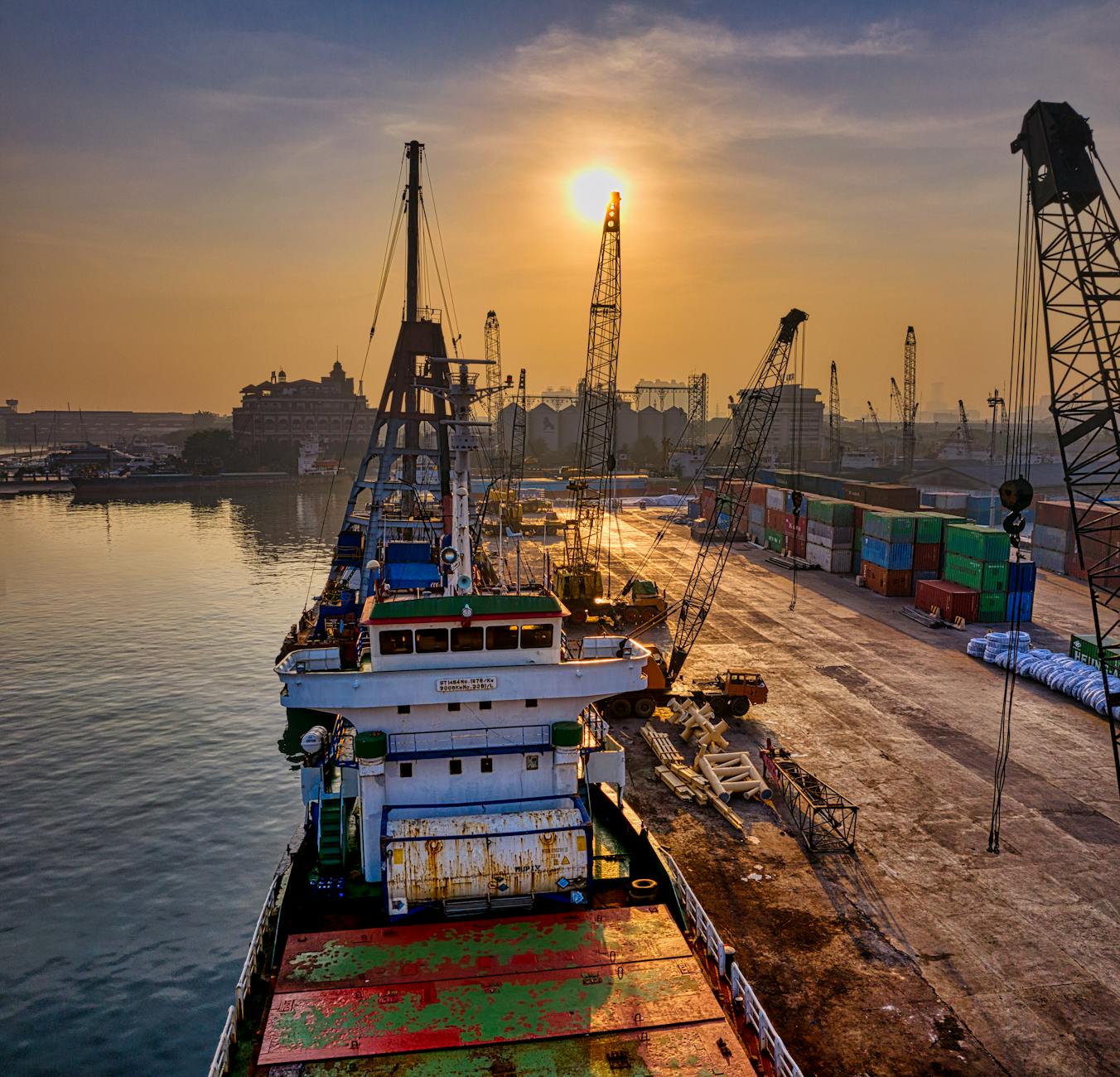
Photo by Tom Fisk on Pexels | Source
What Investors Should Watch
If you're trying to make sense of this from an investment perspective, here are the key indicators to keep your eye on:
- Brent crude and WTI oil prices: These are your leading indicators of how markets are pricing Hormuz risk.
- The VIX (Volatility Index): A rising VIX suggests broader market uncertainty and risk aversion.
- Energy ETFs: Funds tracking oil producers and energy companies will reflect market expectations about sustained price changes.
- Shipping insurance rates: A sharp spike in war risk premiums for vessels transiting the Persian Gulf is a real-time signal of how seriously the industry views the threat.
- US Dollar strength: In geopolitical crises, the dollar tends to strengthen as a safe-haven currency, which has its own complex effects on commodities priced in dollars.
The Diplomatic Dimension
It's worth remembering that military strikes and diplomatic efforts often happen simultaneously. The international community — including key players like China, which is one of Iran's largest oil customers and would be heavily impacted by Hormuz disruption — has enormous incentive to push for de-escalation.
China importing roughly 10-12 million barrels per day means that any serious disruption to Hormuz affects Beijing's economy directly. That gives China both motivation and leverage to play a back-channel diplomatic role, even as it publicly criticizes the strikes.
European nations, too, are acutely aware of the energy security implications, having already navigated the shock of the Russia-Ukraine war and its impact on natural gas supplies. Another major energy shock would be politically and economically damaging for European governments.
The Bottom Line: Stay Informed, Stay Prepared
The Strait of Hormuz has survived geopolitical crises before — and the global community has a strong collective interest in keeping it open. But the current situation represents a genuine escalation, and the risks are real.
What you can do:
- Monitor energy prices and factor potential fuel cost increases into your household budget.
- If you're an investor, consider how your portfolio is positioned relative to energy price volatility.
- Stay informed through reliable news sources as the situation develops — this is a fast-moving story where the facts on the ground can change rapidly.
The world is watching a 21-mile strip of water very, very carefully right now. And you should be too.
FAQ
What is the Strait of Hormuz and why is it strategically important? The Strait of Hormuz is a narrow waterway between Iran and the Arabian Peninsula that serves as the primary outlet for Persian Gulf oil exports. Approximately 20% of the world's oil supply — around 17-21 million barrels per day — transits through it, making it one of the most critical energy chokepoints on Earth.
How would a Strait of Hormuz closure affect oil prices? A full or even partial closure of the Strait of Hormuz would likely cause immediate and sharp spikes in global oil prices, as alternative export routes cannot handle comparable volumes. Analysts estimate that a sustained disruption could push Brent crude prices significantly higher, affecting fuel costs for consumers worldwide.
Can Iran actually close the Strait of Hormuz? A complete closure would be extremely difficult to sustain given the US Navy's presence in the region. However, Iran has significant capability to disrupt shipping through mine placement, drone attacks, tanker seizures, and missile threats — all of which can raise risk premiums and effectively reduce throughput without a formal closure.
How do US-Israel strikes on Iran affect global energy markets? The strikes introduce a significant risk premium into oil markets. Even if physical supply is not immediately disrupted, traders price in the possibility of future disruption, which pushes crude prices higher. Prolonged military activity or calls for regime change — as voiced by President Trump — suggests markets should brace for sustained volatility rather than a brief spike.
What should investors do during Strait of Hormuz tensions? Investors should monitor Brent crude prices, energy sector ETFs, and broader market volatility indicators like the VIX. Diversifying exposure and staying informed about diplomatic developments are prudent steps. Consulting a financial advisor about how geopolitical energy risks fit into your specific portfolio is always recommended during periods of elevated uncertainty.
Frequently Asked Questions
What is the Strait of Hormuz and why is it strategically important?
The Strait of Hormuz is a narrow waterway between Iran and the Arabian Peninsula that serves as the primary outlet for Persian Gulf oil exports. Approximately 20% of the world's oil supply — around 17-21 million barrels per day — transits through it, making it one of the most critical energy chokepoints on Earth.
How would a Strait of Hormuz closure affect oil prices?
A full or even partial closure of the Strait of Hormuz would likely cause immediate and sharp spikes in global oil prices, as alternative export routes cannot handle comparable volumes. Analysts estimate that a sustained disruption could push Brent crude prices significantly higher, affecting fuel costs for consumers worldwide.
Can Iran actually close the Strait of Hormuz?
A complete closure would be extremely difficult to sustain given the US Navy's presence in the region. However, Iran has significant capability to disrupt shipping through mine placement, drone attacks, tanker seizures, and missile threats — all of which can raise risk premiums and effectively reduce throughput without a formal closure.
How do US-Israel strikes on Iran affect global energy markets?
The strikes introduce a significant risk premium into oil markets. Even if physical supply is not immediately disrupted, traders price in the possibility of future disruption, pushing crude prices higher. Prolonged military activity or calls for regime change suggests markets should brace for sustained volatility rather than a brief price spike.
What should investors do during Strait of Hormuz tensions?
Investors should monitor Brent crude prices, energy sector ETFs, and broader market volatility indicators like the VIX. Diversifying exposure and staying informed about diplomatic developments are prudent steps, and consulting a financial advisor about geopolitical energy risks is always recommended during periods of elevated uncertainty.


