

US-Iran Tensions Are Shaking Oil Markets — Here's What You Need to Do
If you've been watching the news lately, you already know things between the United States and Iran have escalated dramatically. Joint US-Israel airstrikes, ongoing air-defense battles, and a sharp diplomatic breakdown have put global oil markets on edge — and that uncertainty is flowing straight into your wallet, whether you realize it or not.
With crude prices swinging on every headline and energy stocks reacting in real time, this is not the moment to be a passive investor. In this guide, we'll break down exactly what the US-Iran standoff means for oil markets in 2026, how it's already affecting energy prices and ETFs, and the smartest moves you can make to protect — and even grow — your portfolio right now.

Photo by AlphaTradeZone on Pexels | Source
Why US-Iran Tensions Matter So Much for Oil
Iran is one of the world's significant oil producers, and the Strait of Hormuz — the narrow waterway Iran borders — is one of the most strategically critical chokepoints on the planet. Roughly 20% of the world's traded oil passes through the Strait of Hormuz daily. When military activity escalates in the region, oil markets don't wait for certainty — they price in risk immediately.
Here's the core dynamic playing out in 2026:
- Supply disruption fears: Any escalation that threatens tanker traffic through the Strait of Hormuz instantly creates upward pressure on crude prices.
- Sanction tightening: As the US ramps up military and diplomatic pressure on Iran, Iranian crude exports — which had been flowing into global markets through workaround routes — face renewed restrictions.
- OPEC+ reactions: Other OPEC+ members like Saudi Arabia and the UAE are watching closely. If Iranian supply tightens, there's political pressure to decide whether to fill the gap or hold the line on production cuts.
- Investor risk premium: Geopolitical uncertainty adds what traders call a "risk premium" to oil prices — essentially, markets paying extra to hedge against worst-case scenarios.
The bottom line? Even if no further military escalation occurs, the threat of conflict keeps oil prices elevated. And if the situation worsens, price spikes could be sharp and fast.
What's Already Happened to Energy Markets
Since the US-Iran military engagement became publicly confirmed in late February 2026, here's what we've seen in markets:
Crude oil benchmarks — both Brent crude and WTI (West Texas Intermediate) — have seen heightened volatility, with prices sensitive to each military briefing or diplomatic statement. Energy sector ETFs like the Energy Select Sector SPDR Fund (XLE) and iShares U.S. Oil & Gas Exploration & Production ETF (IEO) have responded with notable upward pressure as investors rotate into energy as a hedge.
Meanwhile, broader market indices like the Dow Jones and S&P 500 have faced headwinds, with investors weighing the risk of sustained high energy costs feeding back into inflation — just as the Federal Reserve had been cautiously optimistic about rate paths.
Airline stocks and transport-heavy ETFs have taken a hit, as higher jet fuel costs directly compress margins. Consumer discretionary sectors are also feeling pressure, since elevated energy prices act as an indirect tax on consumers.

Photo by Michael Steinberg on Pexels | Source
5 Smart Investment Moves for US-Iran Tension in 2026
So what should you actually do? Here are five concrete, actionable strategies based on how experienced investors typically navigate geopolitical oil shocks:
1. Consider Adding Energy Sector Exposure
If you're underweight in energy stocks or ETFs, a moment of geopolitical tension is historically when energy outperforms. ETFs like XLE, XOP (Oil & Gas Exploration & Production), or VDE (Vanguard Energy ETF) give you diversified exposure without betting everything on one company. That said, don't go overboard — energy is cyclical and volatile.
2. Look at Defense Contractors
Increased US military activity in the Middle East historically benefits defense sector stocks. Companies in the defense supply chain often see revenue visibility improve during extended conflicts. The iShares U.S. Aerospace & Defense ETF (ITA) is a diversified way to play this theme without stock-picking.
3. Hedge with Gold or Commodity ETFs
Gold is a classic geopolitical hedge. When uncertainty spikes, investors flock to safe havens. The SPDR Gold Shares ETF (GLD) or iShares Gold Trust (IAU) are straightforward options. Commodity-broad ETFs like PDBC or DJP can also provide exposure across energy and metals simultaneously.
4. Re-examine Your Inflation Sensitivity
If oil prices stay elevated for months — which is a real possibility if the conflict drags on — inflation expectations will tick up again. That's bad for long-duration bonds and growth stocks trading on far-future earnings. TIPS (Treasury Inflation-Protected Securities) and short-duration bond ETFs can provide some insulation.
5. Don't Panic-Sell Your Core Holdings
This sounds obvious, but it's worth saying. Geopolitical shocks in oil markets are typically temporary in duration, even when severe. Markets that panicked and sold during the 1990 Gulf War, the 2003 Iraq invasion, or the 2019 Saudi Aramco drone attack generally recovered within months. Your long-term S&P 500 exposure remains one of the most resilient investments you can hold.
What Analysts Are Watching Right Now
Several key factors will determine whether this is a short-term price spike or the beginning of a sustained energy market disruption:
- Iranian retaliation options: Iran could respond by targeting oil infrastructure in neighboring Gulf states or attempting to disrupt Strait of Hormuz shipping lanes. Either scenario would be significantly market-moving.
- US diplomatic endgame: Reports suggest the US military operation has clear tactical superiority, but the political endgame remains murky. A negotiated settlement could rapidly deflate the risk premium in oil prices.
- Chinese demand response: China is Iran's largest oil buyer. How Beijing navigates its relationship with Tehran under increased US pressure will have real consequences for global supply flows.
- Trump administration's broader energy strategy: The administration has simultaneously pushed for US domestic oil production increases — more domestic supply could cap how high prices climb even if Iranian supply is restricted.
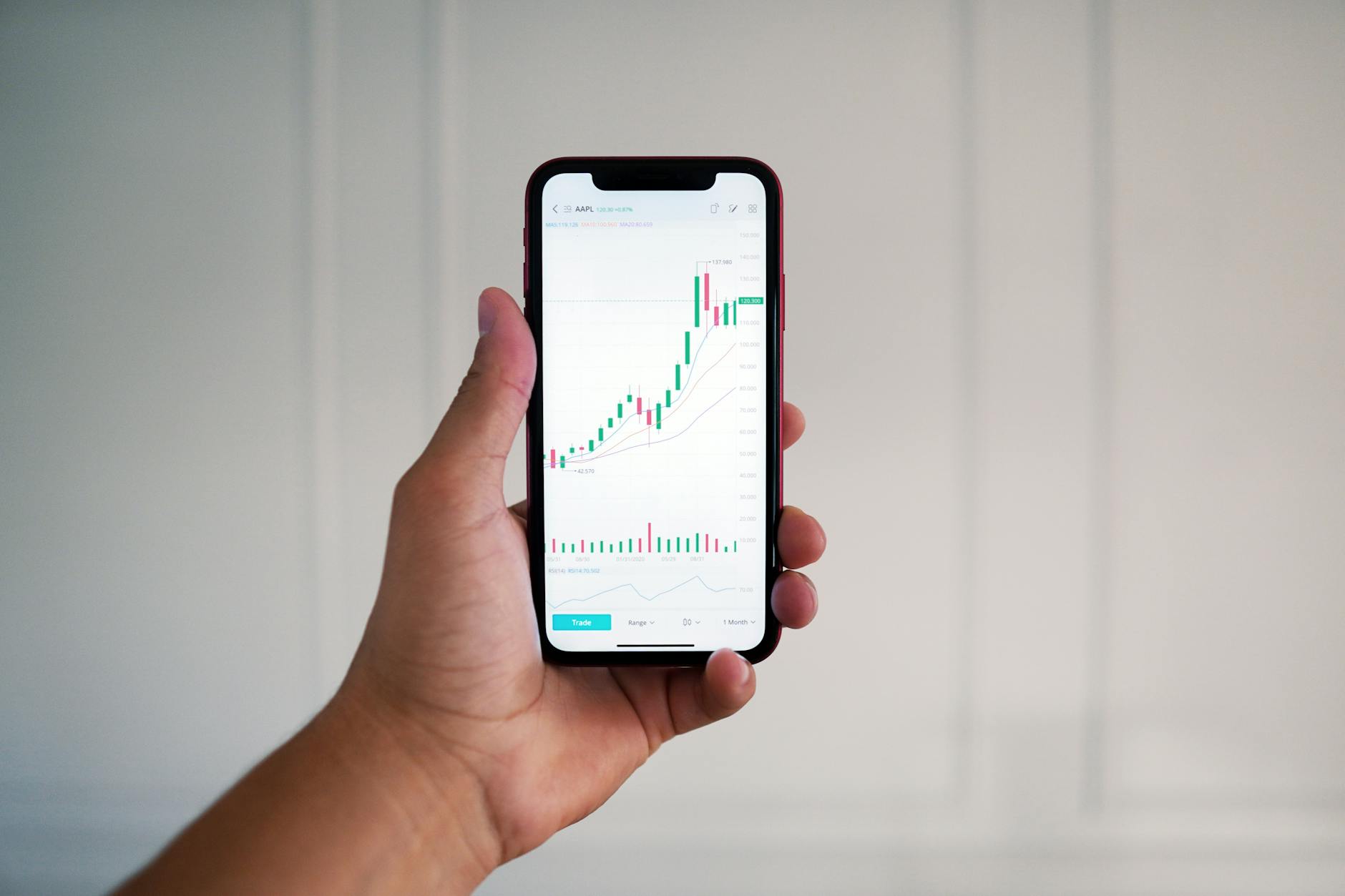
Photo by Joshua Mayo on Pexels | Source
The Bigger Picture: What This Means for Your 2026 Financial Plan
Geopolitical events have a way of making investors feel like they need to do something immediately. And while some tactical adjustments make sense, the most important thing is ensuring your overall portfolio reflects your actual risk tolerance and time horizon — not today's headlines.
Here's a simple framework:
- Short-term traders (under 1 year): Energy sector ETFs and gold hedges make tactical sense right now. Watch technical levels on crude oil closely.
- Medium-term investors (1–5 years): Rebalance toward energy and defense if underweight. Review your inflation-sensitive bond exposure.
- Long-term investors (5+ years): Stay the course. Geopolitical shocks historically create buying opportunities in broad market indices for patient investors. Consider using market dips to add to core positions.
The US-Iran situation in 2026 is serious, complex, and genuinely uncertain in its outcome. But markets have navigated Middle East tensions before — and investors who stayed calm, diversified, and strategic have consistently come out ahead.
Keep a close eye on oil prices, stay diversified, and resist the urge to make dramatic all-or-nothing portfolio decisions based on any single day's news. Your future self will thank you.
FAQ
What happens to oil prices during US-Iran conflict? Oil prices typically rise during US-Iran military tensions because Iran borders the Strait of Hormuz, through which roughly 20% of globally traded oil passes. Markets price in a risk premium even before any actual supply disruption occurs, pushing crude benchmarks like Brent and WTI higher.
What are the best ETFs to buy during a Middle East oil crisis? Energy sector ETFs like XLE (Energy Select Sector SPDR), XOP (Oil & Gas Exploration & Production), and VDE (Vanguard Energy ETF) are popular hedges during Middle East oil disruptions. Defense ETFs like ITA and gold ETFs like GLD are also commonly used to protect portfolios during geopolitical uncertainty.
Should I sell stocks during the US-Iran conflict in 2026? Generally, panic-selling broad market holdings during geopolitical events is not recommended. Historical data from past Middle East conflicts — including the Gulf War and the 2019 Saudi Aramco attacks — shows that markets typically recover within months. Strategic rebalancing toward energy and safe-haven assets is smarter than wholesale selling.
How does the Iran conflict affect inflation in 2026? Sustained high oil prices feed directly into inflation through higher fuel and transportation costs, which ripple across the economy. If the US-Iran conflict keeps crude prices elevated for an extended period, it could slow the Federal Reserve's ability to cut interest rates and put upward pressure on consumer prices broadly.
Is gold a good investment during US-Iran tensions? Gold historically performs well during geopolitical uncertainty and is widely considered a safe-haven asset. During periods of elevated Middle East tensions and oil price volatility, gold often rises alongside crude prices. ETFs like GLD and IAU offer simple exposure without the complexity of owning physical gold.
Frequently Asked Questions
What happens to oil prices during US-Iran conflict?
Oil prices typically rise during US-Iran military tensions because Iran borders the Strait of Hormuz, through which roughly 20% of globally traded oil passes. Markets price in a risk premium even before any actual supply disruption occurs, pushing crude benchmarks like Brent and WTI higher.
What are the best ETFs to buy during a Middle East oil crisis?
Energy sector ETFs like XLE (Energy Select Sector SPDR), XOP (Oil & Gas Exploration & Production), and VDE (Vanguard Energy ETF) are popular hedges during Middle East oil disruptions. Defense ETFs like ITA and gold ETFs like GLD are also commonly used to protect portfolios during geopolitical uncertainty.
Should I sell stocks during the US-Iran conflict in 2026?
Generally, panic-selling broad market holdings during geopolitical events is not recommended. Historical data from past Middle East conflicts — including the Gulf War and the 2019 Saudi Aramco attacks — shows that markets typically recover within months. Strategic rebalancing toward energy and safe-haven assets is smarter than wholesale selling.
How does the Iran conflict affect inflation in 2026?
Sustained high oil prices feed directly into inflation through higher fuel and transportation costs, which ripple across the economy. If the US-Iran conflict keeps crude prices elevated for an extended period, it could slow the Federal Reserve's ability to cut interest rates and put upward pressure on consumer prices broadly.
Is gold a good investment during US-Iran tensions?
Gold historically performs well during geopolitical uncertainty and is widely considered a safe-haven asset. During periods of elevated Middle East tensions and oil price volatility, gold often rises alongside crude prices. ETFs like GLD and IAU offer simple exposure without the complexity of owning physical gold.


