

The COBOL Problem Nobody Wants to Talk About
If you work in banking, insurance, government IT, or any legacy-heavy industry, you already know the elephant in the room: COBOL. An estimated 800 billion lines of COBOL code are still running the world's critical financial infrastructure today — processing everything from Social Security payments to airline reservations. And for decades, the conventional wisdom was simple: modernizing it takes years, costs millions, and requires specialists so rare they're practically mythical.
But here's the thing — that's changing fast. According to a recent TechRadar report, COBOL modernization no longer requires years of consultant work. In 2026, AI-assisted tools, cloud-native platforms, and smarter migration strategies are finally making this decades-old problem solvable on a realistic timeline. If your organization is still running on COBOL and dreading the modernization conversation, this guide is for you.

Photo by Daniil Komov on Unsplash | Source
Why COBOL Has Stuck Around So Long
Before diving into solutions, it's worth understanding why COBOL is still here in the first place. The language was created in 1959, and its staying power isn't accidental. It's remarkably good at what it does: processing massive batch transactions with extreme reliability and precision. Banks trust it. Governments depend on it. The U.S. federal government alone runs systems on COBOL that handle trillions of dollars in transactions annually.
The problem? The developer talent pool is aging out. The average COBOL programmer today is in their mid-50s to 60s, and younger developers simply aren't learning the language. That creates a ticking clock for organizations that haven't started planning their modernization strategy. Here's what's at stake:
- Talent shortage: Finding experienced COBOL developers is increasingly difficult and expensive
- Security risks: Aging mainframe environments are harder to patch and audit
- Integration friction: Modern APIs, cloud services, and microservices don't play nicely with legacy COBOL systems
- Rising maintenance costs: Keeping old mainframe hardware running isn't cheap
- Regulatory pressure: Compliance requirements increasingly demand systems that can be audited and updated rapidly
For years, the standard answer was a massive, multi-year consultant engagement that cost eye-watering sums and often ended in partial failure. Now, there's a better path.
What's Actually Changed in 2026
The shift happened at the intersection of large language models (LLMs), automated code analysis, and cloud migration tooling. Here's what's driving the change:
1. AI-Assisted Code Translation
Modern AI models — including tools built on architectures similar to what powers today's leading LLMs — can now read COBOL code with meaningful comprehension. They can translate COBOL business logic into Java, Python, or Go with dramatically improved accuracy compared to rule-based transpilers from even three years ago. Tools like Amazon Web Services' mainframe modernization service, Google Cloud's COBOL-to-Java migration tools, and a growing ecosystem of specialized vendors now use AI to map COBOL programs, identify dependencies, and generate modern equivalents.
This doesn't mean it's fully automated — human review is still essential. But what used to require a team of consultants for 18 months can now be scoped, analyzed, and partially executed in a fraction of that time.
2. Automated Documentation Generation
One of the biggest hidden costs of COBOL modernization was simply understanding what the code does. Legacy systems often have zero documentation, or documentation so outdated it's misleading. AI tools can now scan COBOL codebases and generate business-readable documentation automatically — mapping what each program does, what data it touches, and what dependencies exist. This alone can compress the discovery phase of a modernization project from months to weeks.
3. Incremental "Strangler Fig" Migration
Modern migration philosophy has also matured. Rather than the terrifying "big bang" approach — ripping out the entire mainframe at once — the strangler fig pattern lets organizations modernize piece by piece. New microservices wrap around old COBOL programs, gradually taking over functionality. The old code is retired module by module rather than all at once. AI tooling now makes it much easier to identify which modules are safe to tackle first and how to build the API bridges needed.
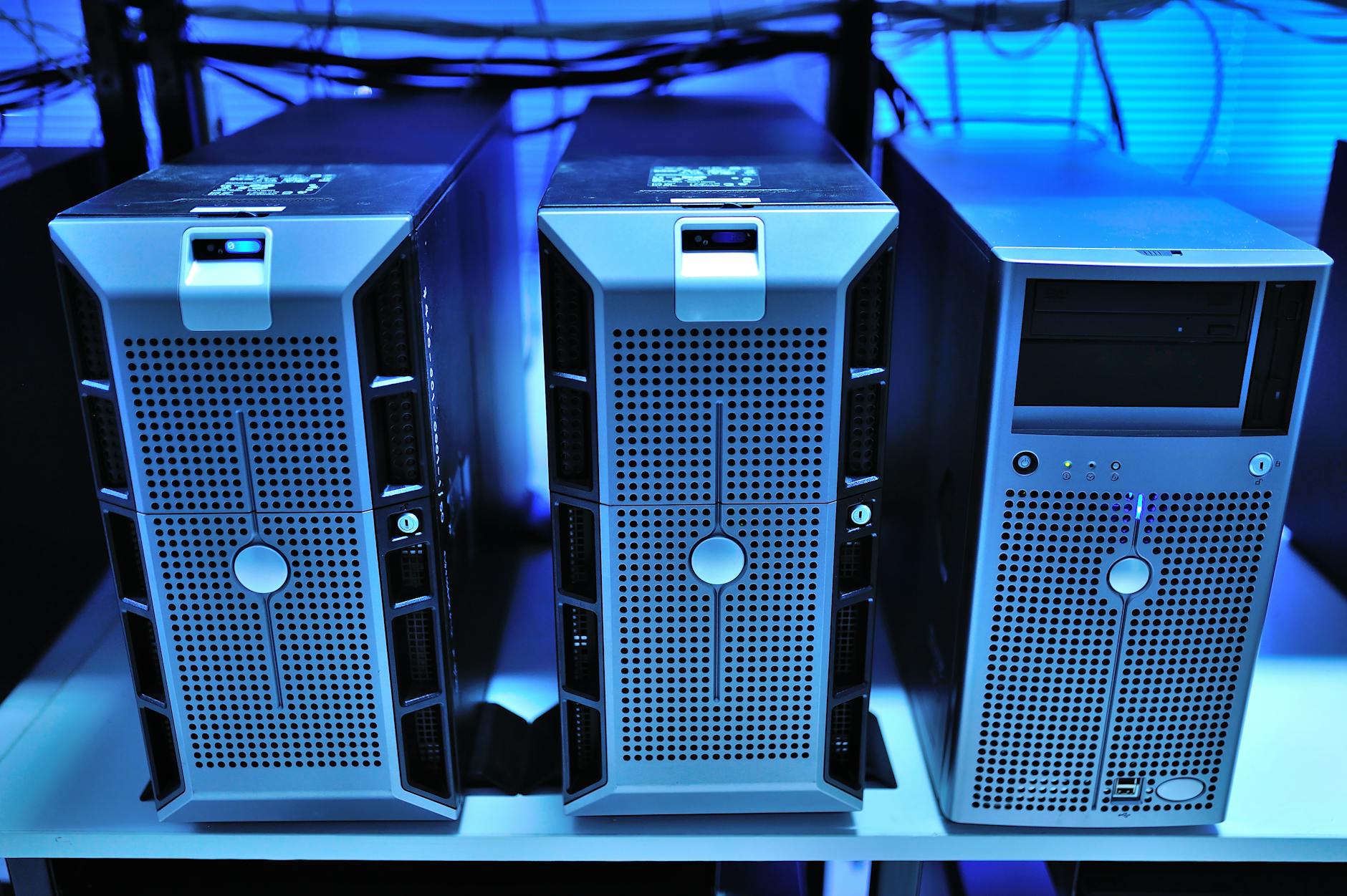
Photo by panumas nikhomkhai on Pexels | Source
A Practical Step-by-Step Modernization Roadmap
Ready to actually start? Here's a realistic framework for 2026:
Step 1: Automated Codebase Discovery (Weeks 1–4) Use AI-powered analysis tools to map your entire COBOL estate. Tools like Micro Focus (now OpenText) COBOL Analyzer, IBM's Application Discovery and Delivery Intelligence (ADDI), or newer AI-native platforms can ingest your codebase and produce dependency maps, complexity scores, and modernization risk ratings.
Step 2: Prioritize by Business Risk and Complexity (Weeks 4–6) Not all COBOL is equally critical or equally complex. Identify "quick win" modules — lower-risk programs with clear logic that can be migrated first to build confidence and demonstrate ROI to stakeholders.
Step 3: AI-Assisted Translation (Months 2–6 for initial modules) Feed prioritized modules into your AI translation pipeline. Set up rigorous regression testing so that the migrated code is validated against the original COBOL output. This is the step where human developers remain essential — reviewing, correcting, and optimizing AI-generated code.
Step 4: Parallel Running and Validation (Overlapping) Run old and new systems in parallel during the transition. Compare outputs transaction by transaction. This is non-negotiable for financial systems where a rounding error can cascade into a compliance disaster.
Step 5: Incremental Decommission As each new module is validated and trusted, retire the COBOL equivalent. Document everything. Celebrate the wins — they add up.
The Tools Leading the Charge in 2026
Here are some of the platforms worth evaluating for your modernization effort:
- AWS Mainframe Modernization: Managed service offering both replatforming and refactoring paths with strong tooling support
- Google Cloud Dual Run: Specifically designed for parallel validation during COBOL migration
- OpenText (Micro Focus) COBOL Tools: Mature toolset with deep enterprise penetration
- Broadcom: Offers mainframe-to-cloud pathways with significant enterprise support
- BlueAge / AWS: Automated COBOL-to-Java refactoring with cloud-native output
- LzLabs Software Defined Mainframe: Run COBOL workloads on x86 cloud infrastructure without code change, as an intermediate step
None of these are magic bullets, but in combination — and with AI-assisted code analysis — they represent a genuinely different capability than what existed even three years ago.

Photo by Markus Spiske on Pexels | Source
What You Should Realistically Expect
Let's be honest: COBOL modernization is still hard. AI tools have compressed timelines significantly, but they haven't eliminated the need for skilled architects, business analysts who understand the underlying processes, and rigorous testing. What's changed is the scale and cost of expertise required.
A modernization project that might have required a 50-person consultant army for three years could now be tackled with a focused team of 10–15 engineers leveraging the right AI tooling in 12–18 months — depending on codebase complexity. That's not nothing. For mid-sized organizations, it's the difference between "maybe someday" and "let's actually do this."
The organizations that will win in the next decade are the ones that treat COBOL modernization as a strategic initiative starting now, not a crisis to manage when the last COBOL developer retires. With AI tools making the process more accessible than ever, the window to act proactively — rather than reactively — is finally open.
The Bottom Line
In 2026, the COBOL modernization conversation has fundamentally changed. AI-powered code analysis, automated translation tools, cloud migration platforms, and smarter incremental strategies have combined to make what was once a decade-long ordeal into something organizations of all sizes can realistically plan and execute. The consultant-or-bust era is fading. The question for your organization isn't whether to modernize — it's how soon you can start.
Frequently Asked Questions
What is COBOL modernization and why does it matter in 2026? COBOL modernization is the process of migrating legacy COBOL-based systems to modern languages, platforms, or cloud infrastructure. It matters in 2026 because the COBOL developer talent pool is shrinking rapidly, maintenance costs are rising, and aging systems increasingly struggle to meet modern security and integration requirements.
How long does COBOL modernization take with AI tools? With AI-assisted tools and a well-prioritized strategy, many organizations can complete initial migration phases in 12–18 months rather than the 3–5 years traditional consultant-heavy approaches required. Timelines vary significantly depending on codebase size and complexity.
What are the best tools for COBOL modernization in 2026? Leading tools include AWS Mainframe Modernization, Google Cloud Dual Run, OpenText (formerly Micro Focus) COBOL Analyzer, LzLabs Software Defined Mainframe, and BlueAge's automated refactoring platform. The best choice depends on your target cloud environment and the specific nature of your COBOL workloads.
Is it safe to use AI to translate COBOL code? AI-assisted translation is significantly safer and more accurate than early rule-based transpilers, but it still requires rigorous human review and parallel testing. Financial and government organizations should always validate AI-generated code against original COBOL output before decommissioning legacy systems.
Can COBOL systems be kept running while being modernized? Yes — this is actually the recommended approach. The "strangler fig" pattern and parallel running strategies allow organizations to modernize incrementally without taking systems offline, which is essential for mission-critical financial and government infrastructure.
Frequently Asked Questions
What is COBOL modernization and why does it matter in 2026?
COBOL modernization is the process of migrating legacy COBOL-based systems to modern languages, platforms, or cloud infrastructure. It matters in 2026 because the COBOL developer talent pool is shrinking rapidly, maintenance costs are rising, and aging systems increasingly struggle to meet modern security and integration requirements.
How long does COBOL modernization take with AI tools?
With AI-assisted tools and a well-prioritized strategy, many organizations can complete initial migration phases in 12–18 months rather than the 3–5 years traditional consultant-heavy approaches required. Timelines vary significantly depending on codebase size and complexity.
What are the best tools for COBOL modernization in 2026?
Leading tools include AWS Mainframe Modernization, Google Cloud Dual Run, OpenText (formerly Micro Focus) COBOL Analyzer, LzLabs Software Defined Mainframe, and BlueAge's automated refactoring platform. The best choice depends on your target cloud environment and the specific nature of your COBOL workloads.
Is it safe to use AI to translate COBOL code automatically?
AI-assisted translation is significantly safer and more accurate than early rule-based transpilers, but it still requires rigorous human review and parallel testing. Financial and government organizations should always validate AI-generated code against original COBOL output before decommissioning legacy systems.
Can COBOL systems stay running while being modernized?
Yes — this is actually the recommended approach. The strangler fig pattern and parallel running strategies allow organizations to modernize incrementally without taking systems offline, which is essential for mission-critical financial and government infrastructure.


