

How the US-Iran War Is Driving Up Energy Prices — And What It Means for Your Wallet
The dramatic escalation of US military strikes on Iran this week has sent shockwaves far beyond the Middle East battlefield. According to Reuters, Barclays analysts now forecast Brent crude could reach $80 a barrel on the back of ongoing US-Iran tensions — a figure that would ripple painfully through household energy bills, grocery prices, and inflation data across the United States and beyond. Meanwhile, Politico reports that the crisis is handing Democrats a new political opening on energy prices, as Republicans face uncomfortable questions about the economic cost of military action.
For ordinary Americans already wrestling with stubborn inflation, the timing could hardly be worse. The Associated Press reported this week that US wholesale prices arrived hotter than expected, rising 0.5% from December and 2.9% from a year ago — numbers that came before the full market impact of the Iran strikes fully materialised. With oil forming the backbone of wholesale price transmission across virtually every sector of the economy, economists are now watching the energy markets with acute concern.
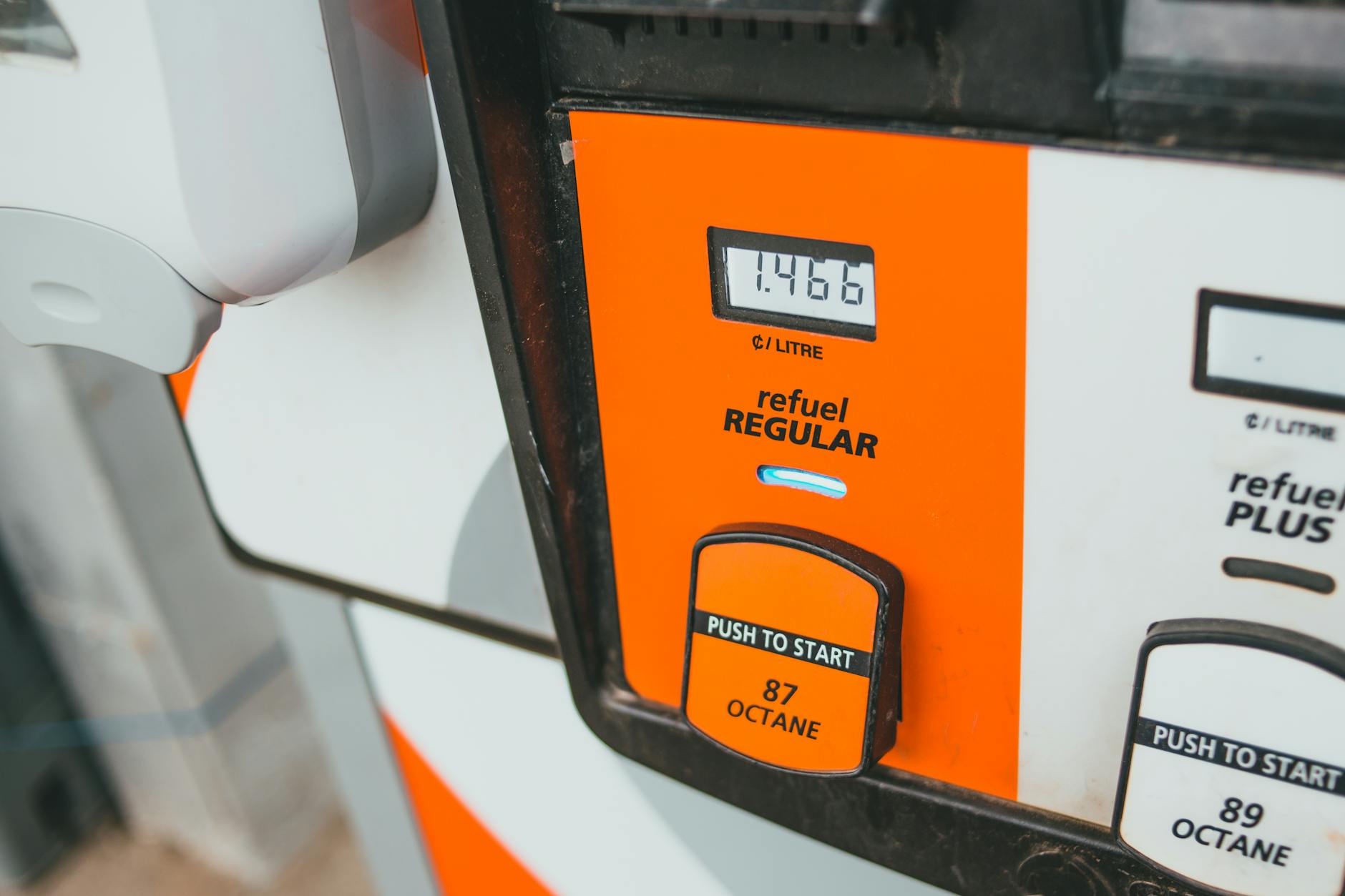
Photo by Erik Mclean on Pexels | Source
What Is Happening in the Oil Market Right Now?
The conflict's effect on energy markets stems from one critical geographic chokepoint: the Strait of Hormuz, through which approximately one-fifth of the world's traded oil passes each day. With explosions reported in Dubai, Bahrain, Jordan, and Kuwait — according to The Guardian — and Iran's government vowing retaliation after the death of Supreme Leader Khamenei, the risk premium being priced into crude oil futures has risen sharply.
Barclays' forecast of Brent crude at $80 per barrel, as reported by Reuters, reflects a specific scenario where tensions persist but do not escalate to full Strait closure. Should that worst case occur, analysts have privately warned that prices could spike significantly higher in a very short period. Key factors currently driving energy market anxiety include:
- Supply disruption risk: Iran produces roughly 3.3 million barrels of oil per day, and any retaliatory interference with Gulf shipping lanes would affect far more
- Insurance cost surges: Tanker insurance costs in the region have reportedly jumped sharply since the strikes began, according to industry reports
- OPEC+ uncertainty: Saudi Arabia and other Gulf producers face a delicate balancing act between solidarity and maintaining market stability
- US domestic production limits: While the US is a major producer, tight refinery capacity means domestic supply cannot fully offset global price shocks
- Speculative pressure: Futures traders have responded aggressively to the geopolitical news, amplifying short-term price swings
According to Investor's Business Daily, the stock market this week is directly grappling with the Iran situation as the dominant macro variable, overshadowing even Berkshire Hathaway's earnings and an expected Apple event in terms of market-moving potential.

Photo by Nothing Ahead on Pexels | Source
The Political Dimension: Democrats, Republicans, and Energy Prices
The energy price surge is creating an unexpected political fissure within the American debate over the Iran strikes. According to Politico, Iran's conflict is giving Democrats a new opening on energy prices — a topic that has traditionally favoured Republicans in recent election cycles. With gasoline prices at risk of climbing at the pump, Democrats are reportedly preparing to argue that military adventurism carries direct economic consequences for American families.
This argument gains further traction from the New York Times' ongoing fact-checking of the Trump administration's justifications for attacking Iran, which has raised questions about the strategic clarity and defined end-goals of the operation. If energy prices climb without a clear resolution to the conflict, the political liability could shift in ways that reshape the 2026 midterm environment.
For consumers, the practical impact is already beginning to show in early data:
- Wholesale price inflation was running at 2.9% year-over-year even before the strikes, according to the AP
- Flight cancellations and travel warnings issued following the strikes, as reported by the BBC, are disrupting supply chains for time-sensitive goods
- Consumer confidence is likely to face near-term headwinds as news coverage of the conflict intensifies
The Conversation noted this week that despite the massive US military action and the death of Ayatollah Khamenei, regime change in Iran is considered unlikely by most analysts — a view that suggests the conflict could become a prolonged, simmering engagement rather than a swift resolution. Prolonged conflict is historically the scenario that keeps energy prices elevated for the longest period.
What Energy Analysts Are Saying About the Path Forward
Barclays' $80 Brent target, as cited by Reuters, is being treated by energy analysts as a baseline rather than a ceiling for now. The bank's reasoning centres on several compounding factors:
- Reduced Iranian export capacity even without a full embargo, due to buyer nervousness and insurance complications
- Gulf state caution about expanding their own production rapidly during active regional conflict
- US strategic petroleum reserve levels that are lower than historical averages, limiting the government's ability to buffer price shocks
- Refinery margin pressures in Europe and Asia that could amplify the retail price impact of any crude increase
For American households, an $80 Brent price translates approximately to gasoline prices in the $3.50–$4.00 per gallon range nationally, depending on regional taxes and refinery costs — though energy economists caution that such translations are always approximate given local market variables.
The broader inflationary impact runs well beyond the gas pump. Energy costs feed directly into food production, manufacturing, and transportation, meaning that a sustained oil price elevation of even 15–20% from current levels could add measurable basis points to core CPI readings in the months ahead — complicating the Federal Reserve's already delicate rate-setting environment.

Photo by Alesia Kozik on Pexels | Source
What Consumers and Investors Should Watch This Week
According to Investor's Business Daily, this week's market action is being framed as a direct reaction to Iran combined with digestion of Berkshire earnings and potential Apple announcements. The interaction between these factors makes for an unusually complex environment for both retail investors and households trying to plan near-term budgets.
For ordinary consumers, the most immediately actionable considerations based on current reporting include:
- Monitor gasoline price trends at local stations over the next 7–14 days as crude market changes filter downstream
- Review travel plans carefully, given BBC-reported flight cancellations and travel warnings that could affect routing and pricing
- Watch wholesale inflation data releases in coming weeks, as the AP's existing 2.9% year-over-year figure could revise upward
- Track Federal Reserve communications for any signals about how policymakers are interpreting energy-driven inflation versus demand-driven inflation
For investors, Reuters' Barclays report on Brent crude targeting $80 provides one concrete anchor point, while Investor's Business Daily's framing of this week as an Iran-reaction week underscores how central the geopolitical variable has become to portfolio strategy across energy, defence, and broader equities.
The situation remains fluid. With Iran's government signalling retaliation and explosions reported across multiple Gulf cities according to The Guardian, the energy market's current anxiety reflects genuine supply-chain uncertainty rather than purely speculative fear. How quickly — or slowly — diplomatic channels re-engage will likely determine whether $80 Brent is a peak or merely a waypoint in a longer price escalation.
Frequently Asked Questions
How much could oil prices rise because of the US-Iran conflict?
According to Barclays, as reported by Reuters, Brent crude could reach $80 per barrel due to US-Iran tensions. This is considered a baseline scenario assuming tensions persist without a full closure of the Strait of Hormuz, which would push prices significantly higher.
Will the Iran war cause gas prices to go up in the US?
Energy analysts suggest an $80 Brent crude price would likely translate to gasoline prices in the $3.50–$4.00 per gallon range nationally, though exact retail prices vary by region, taxes, and refinery capacity. The full impact may take one to three weeks to appear at the pump.
How does the Iran conflict affect US inflation?
The Associated Press reported that US wholesale prices were already running 2.9% higher year-over-year before the strikes on Iran. A sustained oil price increase feeds into food, manufacturing, and transportation costs, which could push inflation readings even higher in coming months.
Is the Strait of Hormuz at risk of being blocked?
The Strait of Hormuz, through which approximately one-fifth of global traded oil passes, faces heightened risk as Iran has signalled retaliation for US strikes. Analysts currently treat a full blockade as a tail risk rather than a base case, but even partial disruptions to tanker traffic could significantly impact energy markets.
What does the Iran war mean for the Federal Reserve and interest rates?
A sustained energy-driven inflation spike complicates the Federal Reserve's position, as energy inflation is considered supply-side rather than demand-driven, making it harder to address through interest rate policy alone. Markets will be watching upcoming Fed communications closely for guidance on how policymakers intend to respond.


