

Iran's Leadership Crisis: What Happens When the Rules Get Thrown Out?
The world is watching Iran with a mixture of shock, uncertainty, and deep concern. Following the reported death of Supreme Leader Ali Khamenei and the unprecedented U.S.-Israeli strikes on Iranian soil, the Islamic Republic now faces what many analysts are calling its most severe internal power struggle since the 1979 Revolution. At the center of this crisis? The Iranian Revolutionary Guards Corps (IRGC) is reportedly pushing to install a new Supreme Leader — entirely outside the legal framework the Islamic Republic has operated under for decades.
If you're trying to make sense of what's happening and why it matters, you're in the right place. Here are 7 key facts you need to understand about Iran's succession crisis right now.

Photo by Sima Ghaffarzadeh on Pexels | Source
1. The Legal Process for Choosing a Supreme Leader Is Being Bypassed
Under the Iranian constitution, the Assembly of Experts — an 88-member clerical body elected by the public — is the sole institution authorized to select and supervise the Supreme Leader. This has been the bedrock of political legitimacy in the Islamic Republic since the days of Ayatollah Khomeini.
However, according to reporting from Iran International, the IRGC is actively pushing to appoint a successor through back-channel, extrajudicial means, sidelining the Assembly entirely. This is not a minor procedural dispute — it's a fundamental challenge to the Islamic Republic's own constitutional order.
Why is this significant?
- It suggests the IRGC has concluded the formal process is too slow or too unpredictable
- It signals a potential shift from theocratic governance toward military-backed authoritarianism
- It risks fracturing the clerical establishment, which has historically been the IRGC's source of ideological legitimacy
2. The IRGC Has Never Been More Powerful — Or More Exposed
The Revolutionary Guards have long been Iran's most powerful military and political institution, controlling vast economic enterprises and wielding enormous influence. But the recent strikes, which severely degraded Iran's air defense systems and struck key IRGC installations, have left the organization in a paradoxical position: weakened militarily, yet politically emboldened.
With the traditional clerical hierarchy in disarray following Khamenei's reported death, the IRGC sees a rare window to consolidate power in a way that was never possible while Khamenei was alive. Analysts at the Council on Foreign Relations note this is precisely the scenario Western policymakers feared most — not a collapsed Iran, but a militarized one.
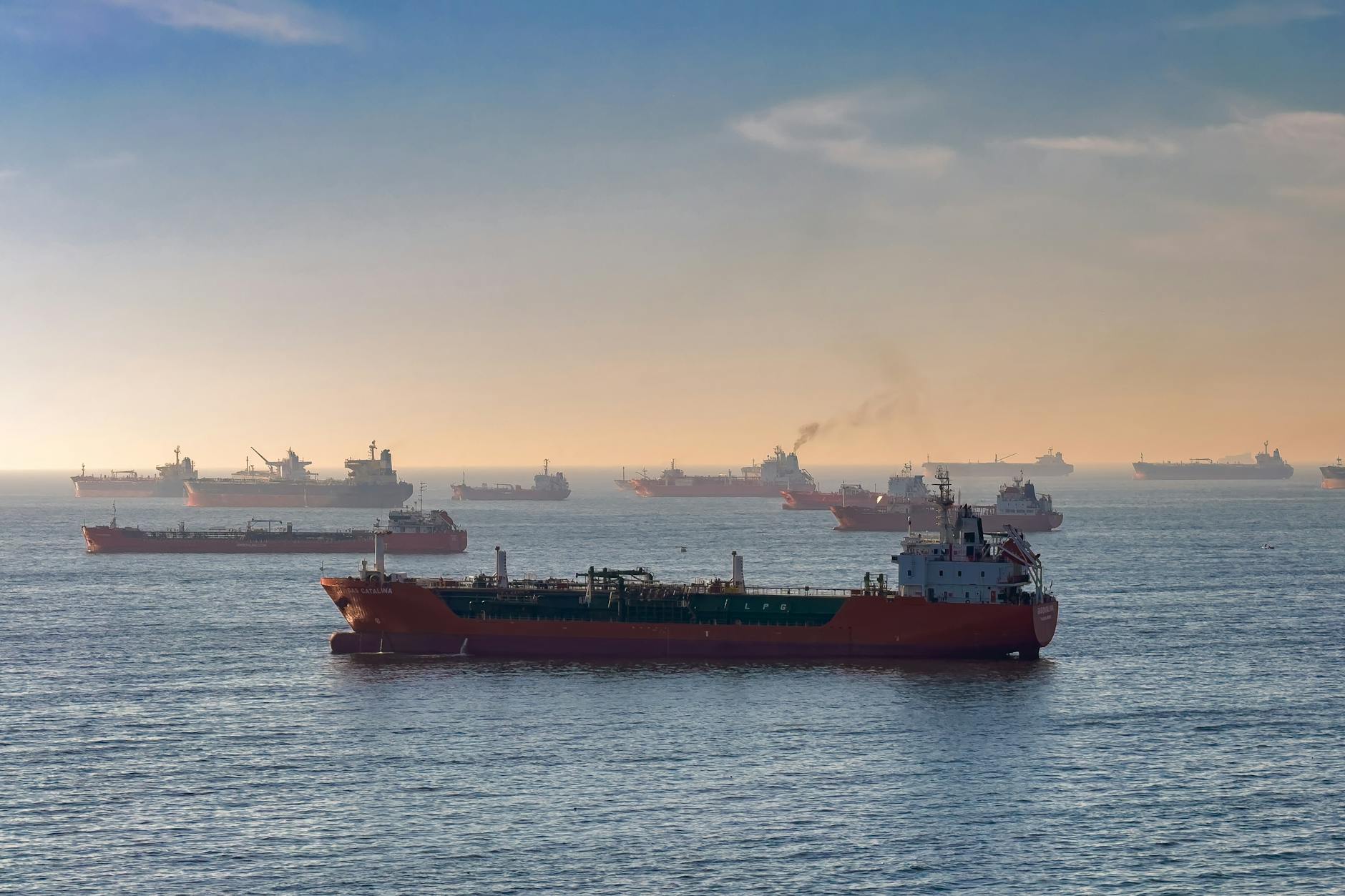
Photo by İrfan Simsar on Pexels | Source
3. Who Are the Potential Candidates?
Several names have circulated in Iranian political circles and among diaspora analysts as possible successors:
- Mojtaba Khamenei — Ali Khamenei's son, who reportedly has IRGC backing but lacks religious credentials, making him deeply controversial among senior clerics
- Ebrahim Raisi's successor figures — Following Raisi's death in a helicopter crash in 2024, a new generation of hardline conservatives has been positioning itself
- Senior IRGC commanders — A non-cleric Supreme Leader would be unprecedented and constitutionally illegitimate under current law, but the Guards appear willing to test that boundary
The absence of a clear, universally accepted candidate is itself a major source of instability. Unlike when Khamenei succeeded Khomeini in 1989 through a controlled process, today's Iran is operating under acute external military pressure, economic collapse, and public unrest — a very different environment for a leadership transition.
4. Protests Inside Iran Are Reshaping the Political Landscape
Street-level unrest in Iran is not new — the world witnessed the Women, Life, Freedom uprising in 2022. But the current wave of protests reported across major Iranian cities represents something different in character. Demonstrators are not simply calling for social reforms; many are openly questioning the legitimacy of the Islamic Republic itself in the wake of military defeat and what they view as government failures.
Key protest dynamics to watch:
- Are security forces following IRGC orders, or are there signs of fracture within the repressive apparatus?
- Is the clerical establishment publicly aligning with or distancing itself from the Guards' power grab?
- How are Iran's ethnic minorities — Kurds, Baluchis, Arabs — responding in their regions?
These questions will determine whether Iran faces a managed succession or a genuine internal collapse.
5. International Law and Diplomacy Enter a Gray Zone
The U.S. strikes on Iran have triggered a fierce debate in Congress about war powers. CNN has reported that lawmakers from both parties are preparing votes to reassert congressional authority over military action — a constitutional question that has been largely unresolved since the War Powers Resolution of 1973.
Meanwhile, international bodies find themselves in an awkward position:
- The United Nations has called for restraint but lacks enforcement mechanisms
- Russia and China have condemned the strikes without offering Iran meaningful support
- Gulf Arab states are privately relieved about the degradation of Iranian military capacity but publicly cautious
- European allies are deeply concerned about refugee flows, energy disruption, and regional escalation
The legitimacy of whoever ends up leading Iran will matter enormously for how the international community engages with the country going forward.

Photo by Tuğba on Pexels | Source
6. Energy Markets and the Global Economy Are Already Reacting
Iran sits at one of the most strategically critical chokepoints in the world — the Strait of Hormuz, through which approximately 20% of the world's oil supply passes. Even before the leadership crisis fully materialized, oil markets had already begun pricing in risk premiums.
For everyday consumers, this translates into:
- Higher gasoline prices in the short term
- Increased energy inflation that could complicate the Federal Reserve's interest rate strategy
- Supply chain uncertainty for industries dependent on petrochemical inputs
Politico has noted that Iran's instability has given Democrats a new opening to push domestic energy production and green energy transition arguments — framing energy independence as a national security issue rather than merely an environmental one.
7. This Moment Is Different From Past Regime Change Scenarios
As Axios has pointed out, Trump's Iran gamble is fundamentally different from past U.S. attempts at regime change — in Iraq, Libya, or elsewhere. The U.S. did not send ground troops, there is no occupation force, and there is no clearly backed opposition government waiting in the wings.
This creates a power vacuum without a clear resolution path. The most likely outcomes, according to regional experts, fall into three broad categories:
- IRGC consolidates control — Iran becomes a military-dominated state, potentially more aggressive and unpredictable than before
- Fragmentation — Regional warlordism, with different factions controlling different parts of the country
- Negotiated transition — The clerical establishment and reformist factions reach a compromise that restores some constitutional legitimacy
None of these outcomes is guaranteed, and the timeline could stretch from months to years.
What This Means for You
You might be wondering why Iran's internal leadership fight should matter to you personally. The honest answer is that it already does — through oil prices, through U.S. military commitments your tax dollars fund, through the humanitarian crises that generate refugee flows, and through the broader question of how great powers navigate a world where military strikes can topple governments without providing replacement governance.
The coming weeks will be pivotal. Watch for signals from the Assembly of Experts, statements from senior IRGC commanders, and whether any credible opposition figure emerges with international backing. Iran's next chapter is being written right now — and the world will live with the consequences for decades.
FAQ: Iran's Leadership Crisis 2026
Q: Who legally gets to choose Iran's next Supreme Leader? According to the Iranian constitution, the Assembly of Experts — an 88-member clerical body — has the authority to select the Supreme Leader. The IRGC's reported effort to bypass this process is constitutionally illegitimate under Iran's own laws.
Q: Could Iran collapse entirely after Khamenei's death? Outright state collapse is considered unlikely by most regional experts, though fragmentation is a genuine risk. The IRGC has extensive resources and organizational capacity to maintain territorial control even amid political chaos.
Q: How will Iran's leadership crisis affect oil prices? Iran's instability creates uncertainty around Strait of Hormuz transit, which has already pushed oil prices higher. Sustained conflict or a prolonged power vacuum could keep energy prices elevated through 2026.
Q: What is the U.S. government's official position on Iran's succession? The U.S. government has not publicly backed any specific successor. Congress is actively debating war powers limitations, and the Biden-era approach of diplomatic engagement has been entirely replaced by the current administration's military posture.
Q: Is there a reformist opposition that could take power in Iran? Reformist and secular opposition figures exist, particularly in the diaspora, but no single figure has emerged with broad enough domestic support or international recognition to credibly claim leadership at this time.
Frequently Asked Questions
Who legally gets to choose Iran's next Supreme Leader?
According to the Iranian constitution, the Assembly of Experts — an 88-member clerical body — has the sole authority to select the Supreme Leader. The IRGC's reported effort to bypass this process is constitutionally illegitimate under Iran's own laws.
Could Iran collapse entirely after Khamenei's death?
Outright state collapse is considered unlikely by most regional experts, though fragmentation is a genuine risk. The IRGC has extensive resources and organizational capacity to maintain territorial control even amid political chaos.
How will Iran's leadership crisis affect oil prices in 2026?
Iran's instability creates uncertainty around Strait of Hormuz transit, which has already pushed oil prices higher. A prolonged power vacuum or escalating conflict could keep energy prices elevated throughout 2026.
Is there a reformist opposition that could take power in Iran?
Reformist and secular opposition figures exist, particularly in the diaspora, but no single figure has emerged with broad enough domestic support or international recognition to credibly claim national leadership at this time.
What does the IRGC bypassing legal succession mean for Iran's future?
If the IRGC installs a leader outside constitutional channels, it would mark Iran's transformation from a theocratic republic to an openly military-dominated state — a shift with major implications for both domestic governance and international relations.


