

Stock Market Rally in 2026: Can It Survive the Iran War and Oil Surge?
If you've been watching your portfolio lately, you've probably noticed something unsettling: the stock market is trying desperately to mount a comeback, but every time it gets close, a new headline from the Middle East knocks it back down. The ongoing U.S.-Israeli military campaign targeting Iran has created one of the most volatile investing environments in recent memory — and whether this rally attempt succeeds or fails could define your financial year.
Let's break down exactly what's happening, what history tells us, and what moves — if any — you should be considering right now.

Photo by Letícia Alvares on Pexels | Source
What's Driving the Market Volatility Right Now?
The current market situation is a classic tug-of-war between fear and opportunity. On one hand, investors are watching oil prices spike rapidly as the Iran conflict disrupts regional energy flows, with the Strait of Hormuz situation adding additional pressure on global supply chains. On the other hand, markets have a long history of eventually shrugging off geopolitical events — if the economic fundamentals hold.
Here's the core problem facing any rally attempt in early March 2026:
- Oil prices are surging — Brent crude and WTI have climbed sharply since the conflict escalated, with analysts at major institutions warning of continued upward pressure as long as the military campaign continues.
- The February jobs report was a gut punch — The U.S. economy shed roughly 92,000 jobs last month, a significant warning sign that consumer confidence and business investment were already softening before the Iran war fully intensified.
- Inflation fears are reigniting — Higher energy costs filter through to virtually every sector of the economy. Airlines, trucking, manufacturing, retail — they all feel it, and ultimately, so do consumers.
- The Fed is in a tough spot — With inflation creeping back up due to energy prices but the labor market weakening, the Federal Reserve faces a dilemma that could limit its ability to support markets with rate cuts.
None of this is a recipe for a clean, sustained rally. But markets are complex, and there are factors pulling in the other direction too.
What History Tells Us About War and Stock Markets
Here's a counterintuitive truth that experienced investors know well: geopolitical crises, including wars, often create buying opportunities — even when the news feels overwhelmingly negative.
Look at the historical pattern:
- Initial shock and selloff — Markets drop sharply as uncertainty peaks.
- Stabilization phase — Once the scope of the conflict becomes clearer, markets often stabilize.
- Recovery and re-rating — Defense stocks, energy producers, and certain commodities surge, while rate-sensitive sectors like real estate and growth tech struggle.
- Normalization — Unless the conflict fundamentally disrupts global trade or tips the economy into recession, broader markets typically recover over a 6-12 month horizon.
The key question for 2026 is whether this conflict remains regionally contained or whether it triggers the kind of oil shock that causes a genuine global economic slowdown. If oil stays elevated above $90-100 per barrel for an extended period, historical precedent suggests that recession risk rises meaningfully.
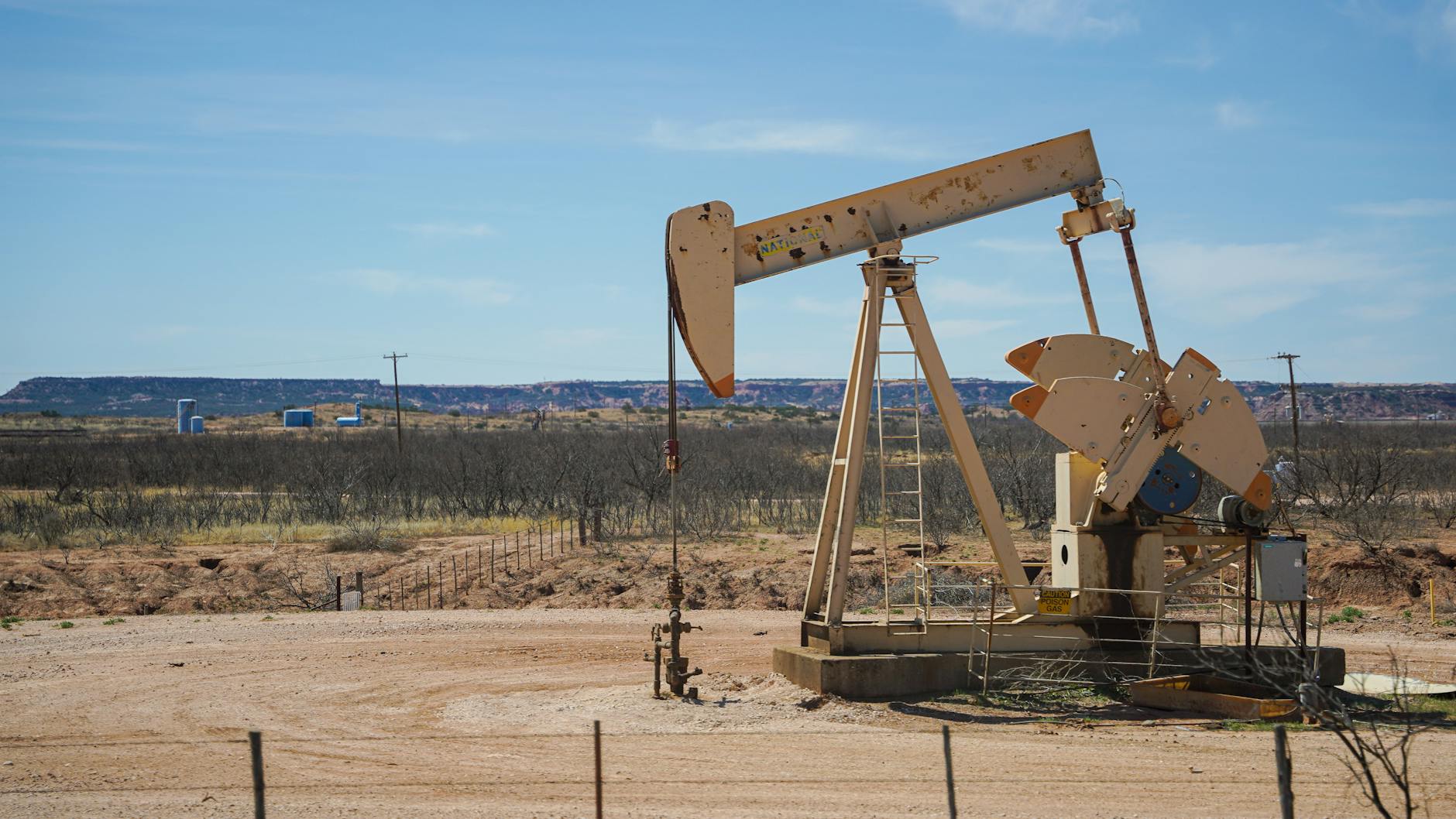
Photo by jayjay13 on Pexels | Source
The Sectors to Watch — and the Ones to Avoid
Not all parts of the market respond the same way to this kind of geopolitical and energy shock. Here's a quick breakdown:
Sectors Likely to Benefit
- Energy producers — U.S. shale companies, integrated oil majors, and LNG exporters are seeing revenue windfalls as prices spike. The UAE and Kuwait oil output cuts following Hormuz disruptions only tighten global supply further.
- Defense and aerospace — Conflict escalation historically boosts defense contractor revenues and stock valuations.
- Commodities broadly — Gold in particular tends to perform well as a safe-haven asset during periods of geopolitical uncertainty.
Sectors Under Pressure
- Consumer discretionary — When gas prices rise sharply (Los Angeles County is already averaging $5.17 per gallon), consumers pull back on non-essential spending.
- Airlines and transportation — Jet fuel costs are a massive expense line, and higher oil directly compresses margins.
- Growth tech and rate-sensitive stocks — If inflation concerns delay Fed rate cuts, the discounted cash flow math on high-growth, high-valuation tech stocks gets less favorable.
- Small caps — Smaller companies typically have less pricing power and thinner margins to absorb cost increases.
What the Rally Attempt Actually Needs to Succeed
For any sustained stock market recovery to take hold, analysts are watching for a few key catalysts:
1. Evidence of a ceasefire or diplomatic off-ramp in Iran This is the single biggest market mover. Even credible talks about de-escalation could trigger a sharp rally in risk assets and a corresponding drop in oil prices.
2. Oil prices stabilizing or retreating If Brent crude pulls back meaningfully from current elevated levels — perhaps through increased output from non-OPEC producers or strategic reserve releases — it removes one of the biggest headwinds facing the market.
3. A resilient labor market reading The February jobs loss was alarming. A March report showing stability or recovery would help counteract recession fears and give investors more confidence that consumer spending can hold up.
4. Fed signaling Any indication from the Federal Reserve that it remains open to rate cuts — even in the face of energy-driven inflation — would be a bullish signal for equities.

Photo by Jakub Zerdzicki on Pexels | Source
What Should You Actually Do With Your Portfolio?
This is the question everyone wants answered, and the honest response is: it depends on your time horizon and risk tolerance. But here are some principles worth considering:
- Don't panic-sell long-term positions — If you're invested for decades, short-term geopolitical crises are almost always noise in the long run. Selling at the bottom locks in losses permanently.
- Review your energy exposure — If you're significantly underweight energy, this environment may warrant reconsidering that position. Energy stocks have been among the strongest performers during the current conflict period.
- Consider the safe-haven trade — Gold, Treasury bonds, and certain commodity ETFs can act as portfolio buffers during volatile periods.
- Keep some dry powder — Volatility creates opportunities. Maintaining cash reserves allows you to buy quality assets at discounted prices if the selloff deepens.
- Avoid making big, concentrated bets — In an environment this uncertain, diversification isn't just a cliché — it's essential risk management.
The Bottom Line
The stock market's rally attempt in early March 2026 is real, but it's fragile. It faces a formidable wall of worry: an active military conflict in one of the world's most strategically important energy regions, a weakening labor market, rising gas prices hitting everyday Americans, and a Federal Reserve with limited room to maneuver.
That doesn't mean markets are doomed — far from it. History shows that markets are remarkably resilient over time, and the current period of volatility will eventually pass. But navigating it successfully requires clear thinking, a long-term perspective, and a willingness to tune out the daily noise.
Stay informed, stay diversified, and resist the urge to make dramatic moves based on headlines. The investors who come out ahead in environments like this are almost always the ones who kept their heads while everyone else was losing theirs.
Frequently Asked Questions
What is causing stock market volatility in March 2026? The primary drivers are the escalating U.S.-Israeli military campaign against Iran, surging oil prices due to Middle East supply disruptions, and a weak February U.S. jobs report showing 92,000 jobs lost. These factors are combining to create significant uncertainty for investors.
How high could oil prices go because of the Iran war? Analysts have been flagging scenarios where sustained disruption to Persian Gulf shipping and production could push Brent crude significantly higher. Much depends on whether the Strait of Hormuz remains accessible and whether non-OPEC producers can ramp output to compensate for losses.
Should I sell my stocks during the Iran conflict? For most long-term investors, panic-selling during geopolitical crises is generally a mistake. History shows markets tend to recover after conflicts. However, reviewing your sector exposure — particularly increasing energy allocation — and maintaining some cash reserves can be sensible defensive moves.
Which stocks do well during a war and oil price spike? Energy producers, oil majors, defense contractors, and commodity-linked assets like gold tend to outperform during periods of geopolitical conflict and rising oil prices. Rate-sensitive growth stocks and consumer discretionary companies typically underperform.
How does the Iran war affect everyday Americans financially? Beyond portfolio impacts, the conflict is already showing up at gas stations — Los Angeles County averages are above $5 per gallon. Higher energy costs feed into inflation broadly, raising costs for transportation, food, and manufactured goods for consumers across the country.
Frequently Asked Questions
What is causing stock market volatility in March 2026?
The primary drivers are the escalating U.S.-Israeli military campaign against Iran, surging oil prices due to Middle East supply disruptions, and a weak February U.S. jobs report showing 92,000 jobs lost. These factors are combining to create significant uncertainty for investors.
How high could oil prices go because of the Iran war?
Analysts have flagged scenarios where sustained disruption to Persian Gulf shipping and production could push Brent crude significantly higher. Much depends on whether the Strait of Hormuz remains accessible and whether non-OPEC producers can ramp up output to compensate for supply losses.
Should I sell my stocks during the Iran conflict?
For most long-term investors, panic-selling during geopolitical crises is generally a mistake — history shows markets tend to recover after conflicts. However, reviewing your sector exposure and maintaining some cash reserves for buying opportunities can be sensible defensive moves.
Which stocks do well during a war and oil price spike?
Energy producers, oil majors, defense contractors, and commodity-linked assets like gold tend to outperform during periods of geopolitical conflict and rising oil prices. Rate-sensitive growth stocks and consumer discretionary companies typically underperform in these environments.
How does the Iran war affect everyday Americans financially?
Beyond portfolio impacts, the conflict is already showing up at gas stations — Los Angeles County averages are above $5 per gallon as of early March 2026. Higher energy costs feed into broader inflation, raising prices for transportation, food, and manufactured goods.


